THE PRACTICAL ANSWER
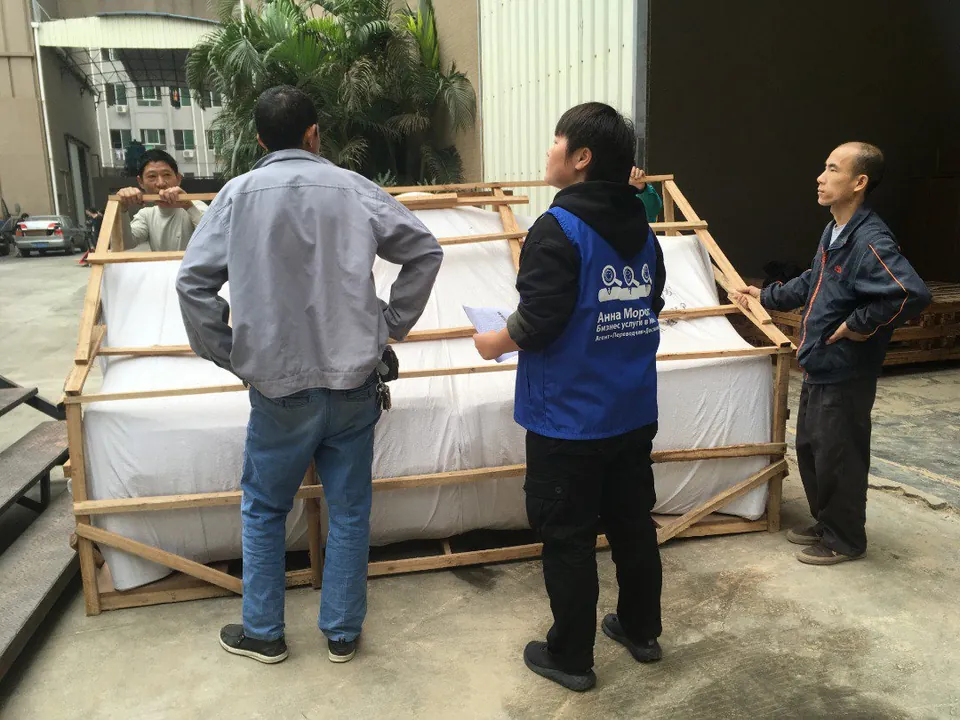
Inspect the actual goods against approved samples and specifications, document defects and close agreed corrections. Check packaging separately, then confirm cartons, labels, hardware and loading records before shipment release.
01 /
Write the inspection brief before production
Give the inspector the item schedule, drawings, approved material and finish references, quantities and destination requirements. Identify critical dimensions and functions. A photograph of a sofa cannot tell the inspector the intended frame construction, firmness, foam or hidden components. State what can be checked visually and what needs separate evidence or testing.
Separate critical safety concerns, functional or substantial appearance problems, and minor cosmetic deviations. Agree the response to each with the provider and supplier. For a custom one-off table, a small defect can have a different consequence from a cosmetic issue in a repeated retail batch. The brief should reflect the actual import order.
02 /
Choose inspection stages around the risk
| Stage | Purpose | What to arrange |
|---|---|---|
| Before production | Confirm drawings, materials and the approved reference | Resolve unapproved substitutions before a full batch starts. |
| During production | Check relevant workmanship and material use while accessible | Choose timing based on the process, rather than waiting until everything is packed. |
| Pre-shipment inspection | Review available finished goods and agreed packing | Confirm the provider’s readiness threshold and reserve correction time. |
| Loading check | Record cargo, condition, securing and seal details | Match the loaded cartons to the released packing list. |
Inspection providers describe their own readiness rules. QIMA’s published PSI information, for example, discusses inspection when at least 80% of the order is complete. Confirm the precise scope and readiness requirement for your booking. A shipment release decision should also account for any remaining goods and final packing, rather than treating a partial check as proof that the full order is ready.
03 /
Use AQL correctly for repeated production
ISO 2859-1:2026 addresses lot-by-lot acceptance sampling by attributes. A sampling plan needs more than an AQL number: define the lot, inspection level, sample selection, defect categories and acceptance/rejection rules. Discuss the plan with a qualified inspection provider. A random sample does not prove every item is defect-free.
A proposal might specify AQL 2.5 for major defects and 4.0 for minor defects, but these are proposed contractual criteria, not a universal furniture requirement or a promise that precisely that share of defects is acceptable in the shipment. For a mixed home order with many unique pieces, checking each item’s identity and critical functions may be more useful than applying one repeated-lot plan.
04 /
Build a furniture-specific checking list
| Check | What to record |
|---|---|
| Identity and quantity | Item code, version, ordered quantity, finished quantity and carton count. |
| Dimensions and fit | Critical measurements against the drawing and agreed method/tolerance. |
| Construction and materials | Accessible construction plus supporting evidence for hidden components. |
| Finish and upholstery | Reference swatch, viewing method, seams, grain, sheen and visible variation. |
| Function | Drawers, doors, mechanisms, stability and assembly as appropriate to the item. |
| Accessories | Correct fittings, labelled hardware kits, instructions and agreed spares. |
| Packaging | Protection, carton condition, marks, dimensions, weights and multi-carton matching. |
Specify tolerances for the actual product; do not impose a single ±3 mm or ±5 mm rule on all furniture. Likewise, agree appropriate wood-moisture criteria, measurement points and instruments with the supplier and specialist. The target depends on the material, construction and destination conditions. A moisture reading is one check, not a guarantee against every movement or crack.
05 /
Separate site inspection from laboratory testing
Visual and functional checks do not replace chemical, fire-performance, load, stability or durability testing where required. Ask a qualified testing provider which method and product version apply. BIFMA describes distinct standards for office seating, public seating, tables and storage; a generic claim of “BIFMA tested” should be tied to an actual report, configuration and intended use.
Do not prescribe an arbitrary drawer-cycle count or carton drop test as a universal requirement. Define the performance objective, applicable method, sample construction and pass criteria with the provider. If testing damages a sample, allow time and budget for it. Keep reports connected to item revisions so a changed component does not silently rely on an old result.
06 /
Pack for the full transport and handling chain
Review corner and edge protection, glass or stone support, abrasion barriers, separation of finished surfaces, humidity precautions and the method for securing loose parts. Ask whether legs, bases or mechanisms should be removed to reduce exposure and volume. Any disassembly must come with complete hardware and usable instructions.
For fragile or oversized pieces, have the packing specialist define the crate and support points. Where solid-wood pallets, crates or dunnage are used, check the applicable ISPM 15 treatment and marking requirements. Processed wood packaging can fall within the standard’s exemptions; assess the actual construction rather than assuming all crates are identical. Packaging treatment is separate from product suitability.
For shared-container transport, ask about repeated handling and whether cartons may be stacked. Confirm the carrier or consolidator’s actual acceptance conditions. Carton dimensions and gross weights should come from the final packaging, not an unprotected showroom measurement. Use the FCL/LCL comparison to review handling differences.
07 /
Close defects and retain shipment evidence
Issue a report that identifies the item, defect, photograph, required action, responsible party and closure status. Agree whether closure needs a new inspection or specific evidence. A supplier’s promise to improve the next batch does not resolve a defect in the container about to depart. Keep buyer acceptance of exceptions explicit.
Before release, reconcile the approved goods, actual packed quantities and loading list. Record container condition, loading progress, securing, carton tally and seal details where relevant. These records support traceability, but do not replace insurance or guarantee a successful claim. Share the relevant receiving checks with the destination team so evidence continues after arrival.
Furniture import questions, answered.
Does an AQL pass mean every item is perfect?
No. Sampling supports a defined acceptance decision for a lot. It does not establish that every item is defect-free or replace product-specific safety testing.
Should a mixed home order use the same QC plan as 500 identical chairs?
Not automatically. Discuss checks for every unique item and critical function, then use sampling only where it fits the order and agreed risk.
REFERENCES / REVIEWED 17 OCTOBER 2026
Sources behind this guide.
- ISO 2859-1:2026: acceptance sampling by attributes ↗
- QIMA: pre-shipment inspection scope and timing ↗
- BIFMA: furniture standard descriptions ↗
- IPPC: ISPM 15 wood packaging standard ↗
Written and reviewed by the Import Furniture China editorial team. Sources support the referenced definitions and processes; practical checklists are our planning guidance. Provider terms, product evidence, schedules and quotation details must be confirmed for the actual order.
About the company and editorial approach · Back to the homepage