THE PRACTICAL ANSWER
Ask for the MOQ per model, size, fabric and finish. Approve representative materials and a production-relevant sample, record drawing revisions and agree measurable acceptance criteria before bulk production.
01 /
Why there is no universal furniture MOQ
Minimum order quantities depend on the production method, available materials, component suppliers, setup work and the seller’s commercial model. One factory may combine existing designs in a mixed order, while another requires a run of the same frame and finish. An advertised minimum can refer to one colour or one product version rather than the whole purchase.
Request a quantity ladder for your actual brief: the smallest acceptable order, the next useful price break and the lead-time consequences. Ask which changes trigger a new minimum. A custom metal part, upholstery dye lot or special veneer can be more restrictive than the furniture assembly itself. Avoid building your budget around a generic sofa, table or chair MOQ found in a guide.
| Furniture category | Ask about | Import consequence |
|---|---|---|
| Sofas and upholstered beds | Frame variants, upholstery availability and fabric batch | Mixed colours may change cost, lead time and matching. |
| Dining tables and case goods | Top size, panel construction, finish batch and hardware | A special finish or component can create a separate run. |
| Office or commercial chairs | Mechanism, base, upholstery and performance evidence | A similar-looking version may have different components. |
| Outdoor furniture | Frame/coating options, woven material and cushions | Appearance alone does not establish suitability for exposure. |
02 /
Understand catalogue, ODM and OEM proposals
A catalogue-based order generally starts from a supplier’s existing range. ODM commonly means the supplier’s design is adapted; OEM commonly means production to a buyer’s design or specification. Suppliers use these terms differently, so write down the actual development scope. Identify who prepares drawings, owns tooling, approves changes and pays for revisions.
For a small import, an existing model with available finishes can reduce development work. For a custom piece, ask about prototype stages, tooling or jigs, component sourcing and the effect of later quantity changes. Confirm that the proposed design can be packed, transported and assembled. A drawing that works in the factory may still create an oversized or fragile export package.
03 /
Distinguish the samples you approve
| Sample | What it can help approve | What it does not establish alone |
|---|---|---|
| Fabric or leather cutting | Colour, texture and selected material reference | Full sofa comfort, hidden construction or batch consistency. |
| Finish board | Colour, sheen, texture and coating reference | The appearance of every curved edge or large veneered surface. |
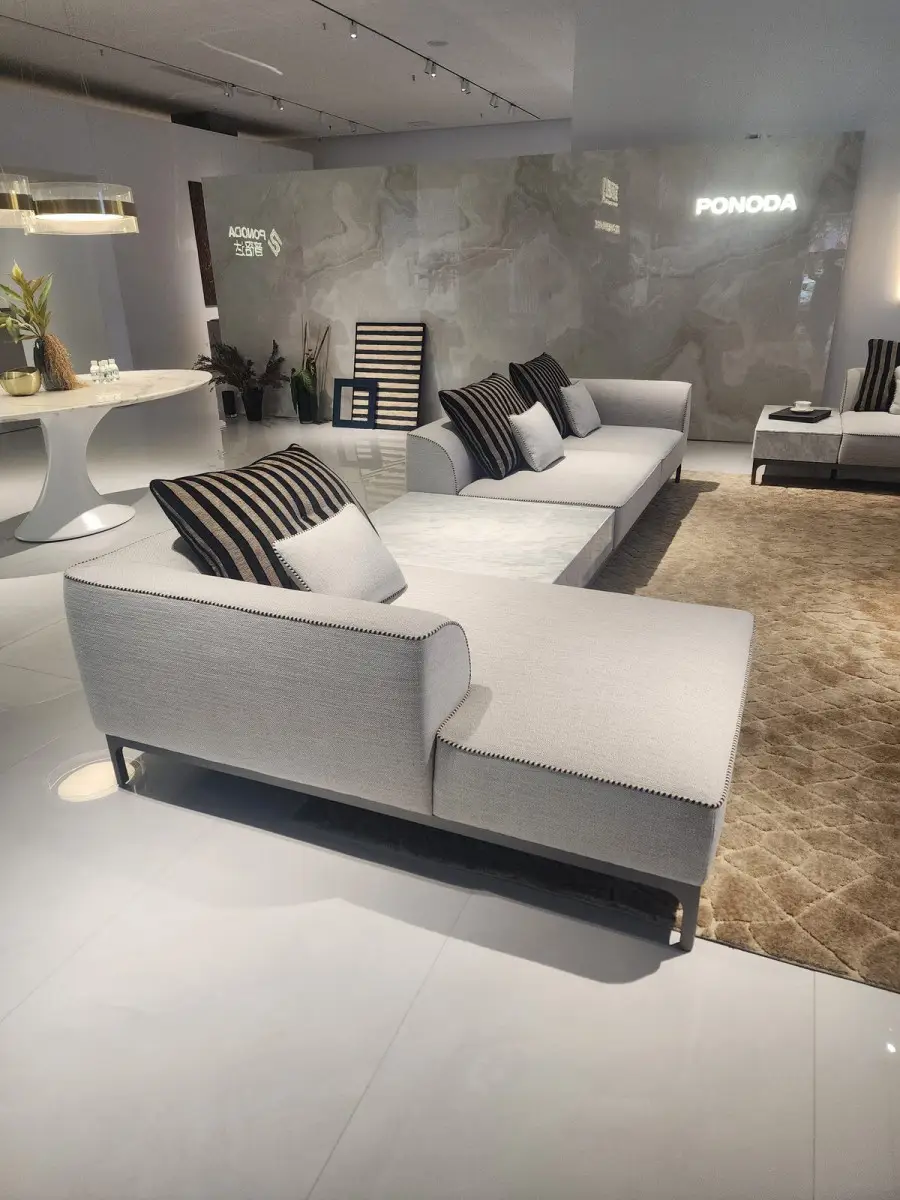
| Showroom display | Style, proportions and an initial comfort comparison | That production will use identical materials or methods. |
| Prototype or pre-production piece | Dimensions, assembly, comfort and agreed construction | That later items will match without production controls. |
| Packing sample | Protection, carton layout and assembly kit arrangement | That the entire shipment has been packed correctly. |
Ask the supplier to identify which materials and processes in the sample represent the bulk order. Record exceptions rather than assuming the factory will remember a conversation. If a sample uses temporary hardware or substitute fabric, keep bulk approval conditional until the actual component is reviewed.
04 /
Turn material names into an import specification
“Wood,” “leather” and “metal” leave important questions open. Identify solid timber versus veneered board, MDF or plywood; specify the visible surfaces and structural components separately. For upholstered pieces, record the covering, foam and support construction. For bamboo, rattan, wicker and metal designs, identify the actual material and finish rather than relying on a style description.
Review the intended use with the supplier and, where appropriate, a testing provider. A residential chair and restaurant chair may need different evidence. BIFMA publishes descriptions of several distinct furniture standards; there is no single test claim that proves every product suitable for every setting. Ask for evidence matching the exact version and required use.
05 /
Record approvals so inspection can use them
Assign a version number to the item schedule and drawings. Attach dated photographs, material codes, finish references and signed changes. Keep a retained reference sample or an agreed equivalent comparison system. If the project spans factories, coordinate common finishes centrally and review samples together where possible; similar names do not guarantee a visual match.
Agree dimensional and finish tolerances for the piece, its function and the measurement method. A fitted component, a free-standing table and a soft cushion need different criteria. Do not copy one blanket millimetre tolerance into every order. The inspector should know which deviations affect fit or function and what requires buyer approval.
Colour evaluation also needs an agreed method: reference sample, viewing conditions, acceptable variation and any instrument-based comparison. Photographs taken under different lighting can be misleading. Retain actual swatches and finish boards where matching matters, then use the inspection and packing guide to plan verification.
06 /
Set the approval gate before production
Confirm the sample price, courier or freight cost, revision allowance, ownership and whether any amount will be credited against the main order. Record who can approve the sample and when production is authorized to start. “Approved with changes” should list each change and identify whether another sample is required.
Before bulk production, check the final quantity mix, item codes, production materials, finish, drawings, packing and destination evidence. Agree how a substitution request will be handled. If the buyer changes dimensions after approval, ask for the revised price and schedule before accepting it. This keeps the sample decision connected to the full import timeline.
Furniture import questions, answered.
Can I import a few pieces from different ranges?
Some sellers accept mixed catalogue orders. Confirm minimums per version, available materials, export packing and the complete logistics cost for the actual selection.
Is a showroom sample enough?
It is useful for comparison, but ask which details represent the offered production order. Record materials, dimensions and an agreed production reference before manufacturing.
REFERENCES / REVIEWED 17 OCTOBER 2026
Sources behind this guide.
Written and reviewed by the Import Furniture China editorial team. Sources support the referenced definitions and processes; practical checklists are our planning guidance. Provider terms, product evidence, schedules and quotation details must be confirmed for the actual order.
About the company and editorial approach · Back to the homepage