THE PRACTICAL ANSWER
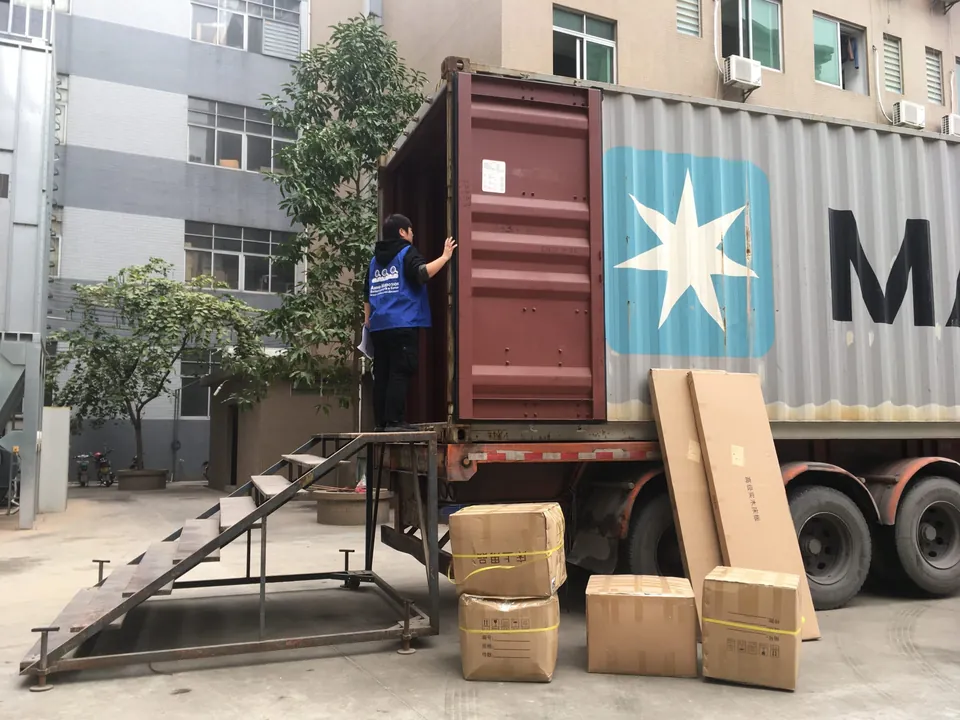
FCL gives the shipment a dedicated container; LCL shares space with other cargo. Compare actual itemized quotes, packed dimensions, fragile and non-stackable pieces, warehouse handling and destination delivery. There is no universal CBM break-even point.
01 /
What changes between FCL and LCL?
| Decision | FCL / dedicated container | LCL / shared container |
|---|---|---|
| Space | Container booked for the shipment; practical fit still needs review. | Space booked within a consolidated service. |
| Handling | Can reduce shared consolidation handling, depending on the route. | Usually includes consolidation and deconsolidation stages. |
| Pricing questions | Equipment, route, collection, terminal costs and delivery. | Chargeable volume/weight, minimums, handling and destination fees. |
| Best comparison basis | The same packed cargo list and delivery address. | The same packed cargo list and delivery address. |
| Main constraint | Packing layout, access, schedule and complete container cost. | Piece size, stackability, acceptance conditions and complete service cost. |
Do not compare a port-to-port FCL number with a door-delivery LCL number. Ask the forwarder to quote identical boundaries, note exclusions and confirm how revised dimensions affect the bill. A bulky sofa with little weight can be expensive to move because it occupies protected space that cannot safely support other freight.
02 /
Understand nominal container capacity
| Dry container reference | Published approximate internal volume |
|---|---|
| 20-foot standard | 33.2 m³ |
| 40-foot standard | 67.7 m³ |
| 40-foot high cube | 76.4 m³ |
These are Maersk’s published reference capacities, not guaranteed usable furniture loads. Actual equipment and road limits need confirmation. Carton shape, door opening, protective supports, non-stackable surfaces, securing space and weight distribution reduce what can be loaded. A sum below nominal capacity does not prove the load fits.
A high-cube container adds height, but furniture does not automatically stack to that height. Ask for actual equipment dimensions and a loading review. Heavy stone tops or dense case goods may create weight constraints before volume is exhausted. Keep the largest packed piece and its loading orientation visible in the cargo list.
03 /
Calculate packed CBM, then examine the layout
For a rectangular carton measured in metres: length × width × height = cubic metres. Multiply by the number of identical cartons, then sum all cartons. Measure the final package, including crate, pallet or projecting protection. Product dimensions taken from a catalogue are not a reliable substitute.
Worked arithmetic example: four cartons measuring 1.20 × 0.80 × 0.75 m each occupy 0.72 m³ per carton and 2.88 m³ in total. This illustrates volume only; it is not a freight quote or loading approval. The forwarder must confirm chargeable measurements, minimums, weight rules and acceptance conditions.
Use the packed furniture volume tool to organize your figures. Then review what may be stacked, what needs an upright orientation and what must remain accessible for unloading. A loading plan connects the numbers to the real furniture.
04 /
Request a quote with the complete transport scope
- Origin: factory pickup, consolidation receiving, export packing, warehouse work and documentation.
- Main transport: equipment or LCL service, route, sailing assumptions, transshipment and quote validity.
- Destination: handling, deconsolidation if applicable, release work, local transport and appointment booking.
- Delivery: exact address and access, vehicle, unloading, room placement and optional assembly.
- Delay exposure: storage, free-time conditions, demurrage, detention and failed-delivery arrangements.
Ask which lines are fixed, estimated or payable to another provider. If a supplier includes freight, request enough detail to understand where its service ends. Published per-CBM or container ranges can become stale quickly and often omit material charges, so use a current written quote for your cargo.
05 /
Use delivery terms with a named place
Incoterms® allocate specified delivery responsibilities and risks; they do not replace the product specification, payment agreement or full service scope. Write the chosen rule, version and precise named place into the order. Ask the forwarder to explain the physical handover in plain language.
ICC guidance distinguishes EXW collection responsibilities, FCA carrier handover and the sea/inland-waterway rules FOB and CIF. For containerized movements, review FCA with the forwarder rather than assuming FOB is always the appropriate choice. Under CIF, arranging freight to the destination port does not mean the seller carries all transit risk until your home.
For door-to-door proposals, separately confirm importer arrangements, unloading and inside delivery. “Door” might mean a vehicle reaches your kerb or loading bay. It does not automatically include carrying a marble table upstairs or assembling wardrobes. Read the receiving and delivery guide before accepting the quote.
06 /
Compare other modes only where they fit
Air freight and express couriers can be useful for samples, replacement hardware and urgent components. Bulky furniture may incur substantial volumetric charges. Ask for the service’s maximum piece dimensions, packing requirements, charged weight and complete delivery scope before selecting it.
Rail or multimodal routes may be available for some destinations. Confirm the actual lane, operators, border handling, insurance conditions and local delivery rather than assigning a universal transit time. Every mode needs a plan for document preparation and receiving; speed on one transport segment does not remove those steps.
07 /
Make the booking decision after inspection readiness
Connect the booking to supplier ready dates, inspection closure and warehouse cut-offs. A confirmed vessel does not make unfinished furniture ready. If several factories contribute to the order, set the last acceptable receiving date and decide in advance how to handle a late balance.
Choose the option that fits the complete order and the delivery deadline. Keep the quote, cargo list, packing approval and insurance confirmation together, then update them if the selection changes. For the upstream work, use the multiple-factory consolidation guide.
Furniture import questions, answered.
At what CBM should I choose FCL?
There is no universal threshold. Obtain comparable quotes and consider stackability, fragile pieces, handling, minimum charges and destination service.
Does 67.7 m³ mean a 40-foot container will hold 67.7 m³ of my furniture?
No. It is a reference internal volume. Actual fit depends on the equipment, carton shapes, stacking restrictions, securing, weights and loading access.
REFERENCES / REVIEWED 17 OCTOBER 2026
Sources behind this guide.
- Maersk: container capacity and cargo limits ↗
- ICC: choosing Incoterms® 2020 and delivery responsibilities ↗
Written and reviewed by the Import Furniture China editorial team. Sources support the referenced definitions and processes; practical checklists are our planning guidance. Provider terms, product evidence, schedules and quotation details must be confirmed for the actual order.
About the company and editorial approach · Back to the homepage